Back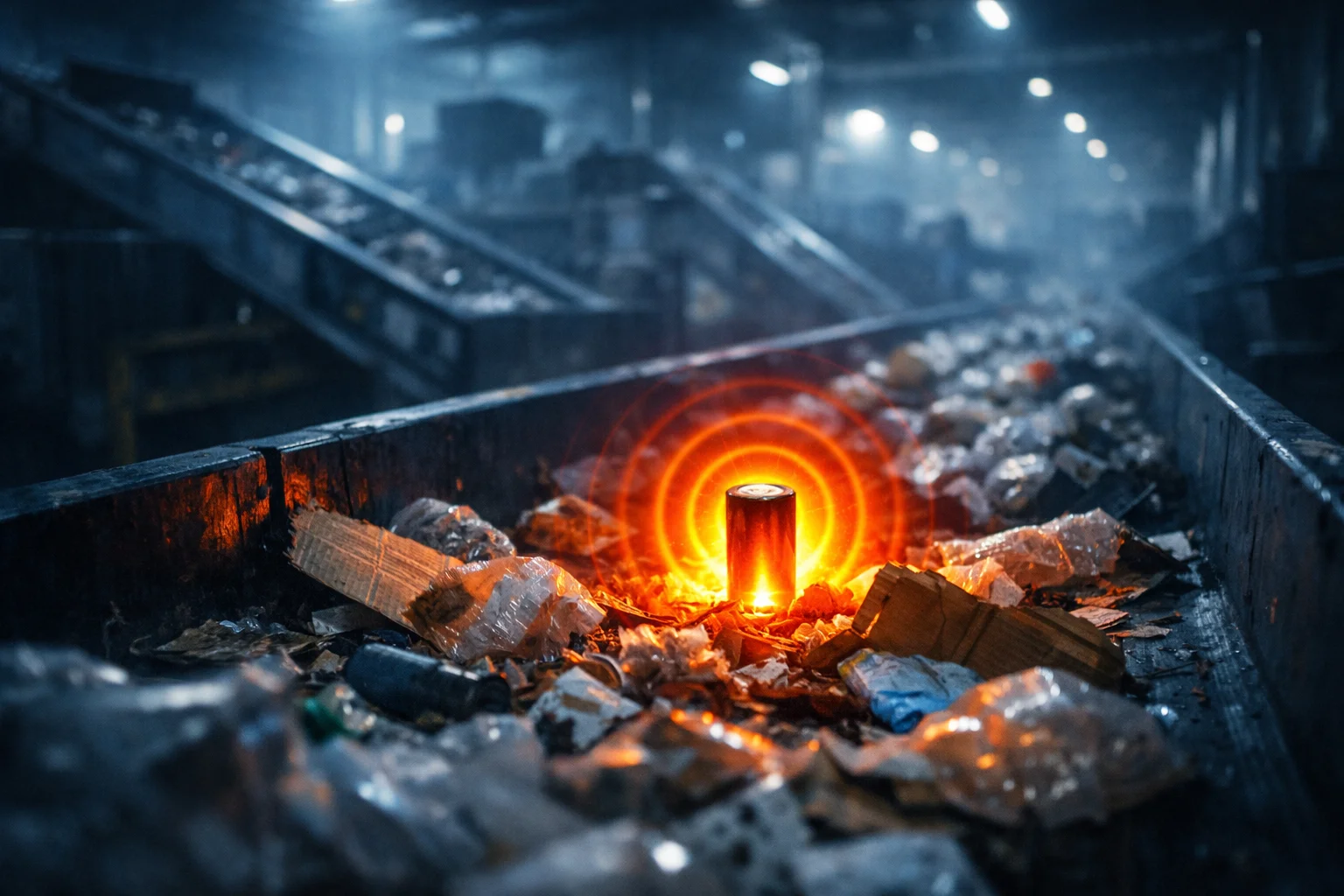
2026-03-03/Drew Hanover
Combating the Lithium-Ion Threat: A New Standard for Recycling Plant Safety
There's a fire burning at a recycling facility right now. Statistically, there's probably several.
The waste and recycling industry logged over 430 publicly reported fires in 2024 — a 58% increase from 2016. The average single-stream MRF experiences more than 18 fires per year. And when one of those fires escalates to a catastrophic loss, the average damage is $22 million.
The leading cause? Lithium-ion batteries that never should have been there in the first place.
The Battery Problem You Can't Sort Away
Every day, lithium-ion batteries enter your material stream. Disposable vapes. Old phone chargers. Laptop batteries. E-bike packs. Cordless tool batteries tossed in a curbside bin by a homeowner who didn't think twice about it.
These batteries are designed to store enormous amounts of energy in a small package. That's what makes them useful. It's also what makes them dangerous when they get crushed in a baler, punctured on a sorting line, or compressed under tons of material in a waste pile.
When a lithium-ion cell is damaged, it can enter thermal runaway — a self-sustaining chain reaction where the cell's internal temperature skyrockets, venting hot gases that ignite surrounding materials. In a facility full of paper, cardboard, and plastic, thermal runaway doesn't stay contained. It spreads.
The scariest part? It can happen immediately. Or hours later. Or days later. A battery that was damaged on Monday's tipping floor can ignite in Wednesday's bale storage. There's no predictable timeline. No reliable visual indicator. The cell looks fine until it isn't.
The "Vape Effect"
The recycling industry has a name for the newest accelerant of this crisis: the Vape Effect.
Disposable vapes contain small but potent lithium-ion cells. They're cheap, ubiquitous, and nearly impossible to separate from mixed recyclables at the consumer level. There's no convenient, widely available drop-off option for most consumers. So they end up in bins, then on trucks, then on your sorting floor.
Unlike a laptop battery that's at least recognizable, a vape can look like any small piece of plastic. It slips through pre-sort. It gets crushed. And when it does, it becomes an ignition source surrounded by the most combustible materials in your facility.
This isn't a problem that better signage or consumer education alone will solve. The batteries are already in the stream. The question is whether you can detect them before they ignite.
Why Traditional Detection Falls Short
Most recycling facilities rely on some combination of smoke detectors, sprinkler systems, and visual inspection. These are necessary. They're also insufficient.
Smoke detectors activate after combustion has already begun. In a facility with large volumes of material, by the time smoke reaches a ceiling-mounted detector, a fire can already be well-established.
Sprinkler systems suppress fires — they don't prevent them. Activation means water damage to your material, potential equipment damage, and almost certain production downtime. Sprinklers are a last resort, not a front line.
Visual inspection depends on personnel being in the right place at the right time. A smoldering battery buried under two feet of mixed recyclables doesn't produce visible smoke until the fire has grown. Night shifts and weekends make this gap even wider.
What all of these approaches have in common: they react to fire. They don't prevent it.
Thermal Monitoring: Detection Before Ignition
Thermal runaway produces one thing before it produces smoke, flames, or gas: heat.
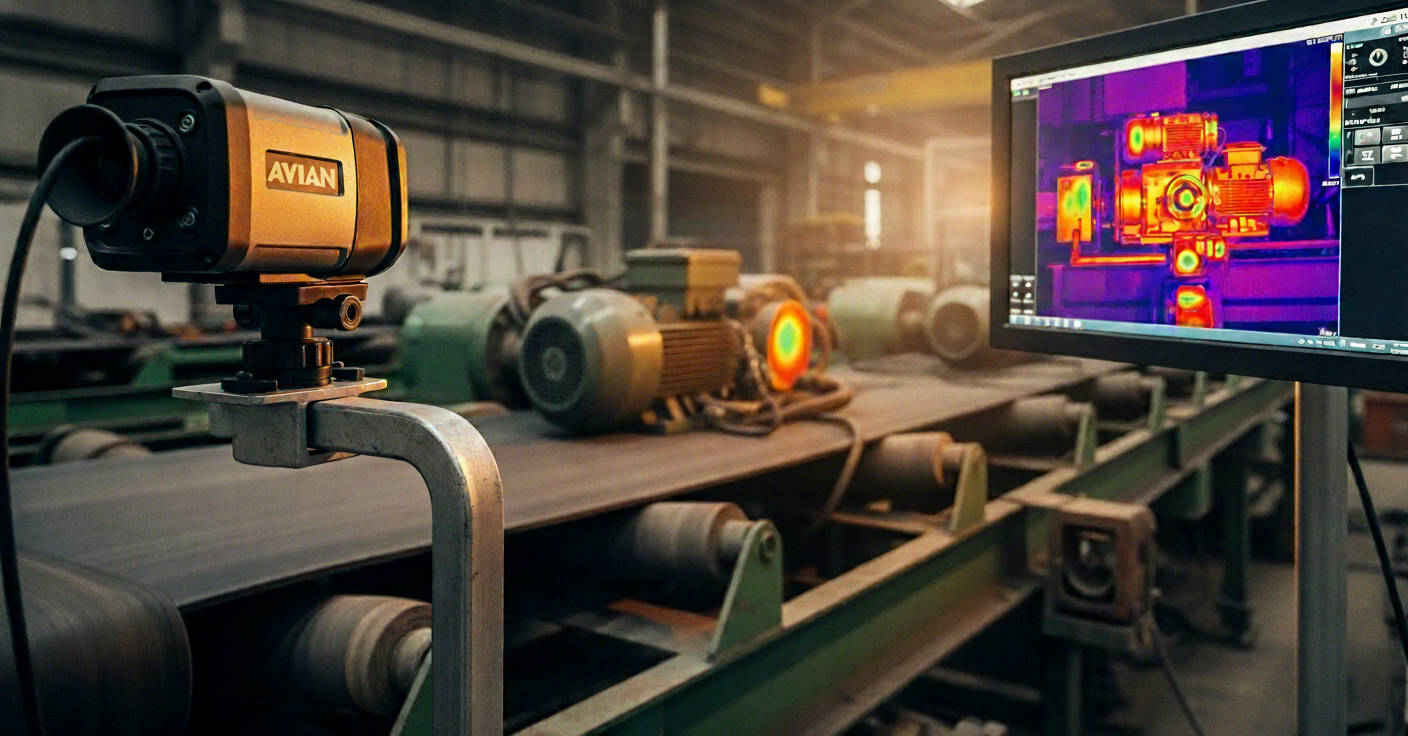
A lithium-ion cell in thermal runaway generates intense, localized heat that is invisible to the human eye but unmistakable to a thermal camera. The surface temperature of a failing cell rises rapidly — from ambient to well over 100°C — before any visible signs of combustion appear.
AVIAN's thermal cameras detect this heat signature in real time. Not after the fire starts. Not when smoke triggers a detector. During the thermal runaway itself, while there's still time to intervene.
Here's what that looks like in practice:
On the tipping floor. Material arrives and gets pushed into staging areas. A damaged vape buried in the load begins to heat. AVIAN detects a localized temperature anomaly against the baseline of surrounding material and sends an alert. Operators isolate the load before ignition.
On the sorting line. Mixed recyclables move through at speed. A crushed battery cell begins heating on a conveyor belt. AVIAN flags the thermal spike — even detecting small, fast-moving objects — and can trigger an automatic PLC shutdown or diversion before the material reaches the baler.
In bale storage. Baled material sits for hours or days before shipping. A battery compressed during baling begins a slow thermal runaway. AVIAN's continuous monitoring detects the gradual temperature rise in the bale — anomalous against the cool, stable baseline of surrounding bales — and alerts your team to isolate it.
In waste piles. Organic decomposition and buried batteries both generate heat. AVIAN's adaptive algorithms learn the normal thermal profile of your material piles over time. When a hotspot develops that deviates from the baseline, you know about it — whether it's midnight on a Tuesday or 3PM on a holiday.
Not Just Detection — Automated Response
Detection alone isn't enough if nobody is watching the screen. That's why AVIAN integrates directly with your existing control systems.
When a critical thermal event is detected:
- Instant alerts go out via text, phone call, and email to designated personnel
- PLC integration can trigger conveyor shutdowns, diversion gates, or suppression systems automatically
- No human delay — the response starts in seconds, not the minutes it takes for someone to notice smoke and locate the source
This matters most during the hours when your facility is most vulnerable: nights, weekends, and holidays. The times when staffing is thinnest and response times are longest are exactly the times when automated thermal detection is most critical.
The Economics of Prevention
Let's talk numbers.
The average catastrophic MRF fire causes $22 million in damage. Property insurance for stand-alone MRFs has increased 10-50x over the past several years, from roughly $0.15 per hundred dollars of insured value to as high as $10 per hundred. Some facilities are struggling to obtain coverage at any price.
Insurers aren't just raising premiums. They're changing what they require. Engineered fire suppression systems, documented protocols, staff training records, and proof of detection technology are increasingly becoming conditions of coverage — not suggestions.
Facilities that invest in detection and suppression technology aren't just reducing fire risk. They're making themselves insurable. Some operators have negotiated premium reductions of up to five times the cost of their fire prevention systems.
An AVIAN system that detects one thermal event before ignition — one bale that gets isolated instead of burning, one conveyor shutdown that prevents a line fire — pays for itself many times over. And it keeps paying every day the facility doesn't burn.
A Different Kind of Monitoring
We built AVIAN for industrial environments where the hazards change daily. That's a perfect description of a recycling facility.
Your material stream isn't consistent. The risks shift with every truckload. A system that relies on fixed temperature thresholds can't keep up with an environment where "normal" looks different every day.
AVIAN adapts. Our algorithms learn the thermal patterns of your facility — your tipping floor, your sorting lines, your conveyors, your storage areas — and build dynamic baselines that adjust for time of day, material load, and ambient conditions. When something deviates from your facility's normal, we catch it. Not because someone programmed a threshold. Because our AI learned what "normal" looks like and recognizes when it changes.
That's the standard recycling facilities need. Not detection after ignition. Not alerts after smoke. Prevention before fire.
Ready to protect your facility? Talk to our team about a monitoring plan built around your operation.
Drew Hanover
CTO & Co-Founder