Back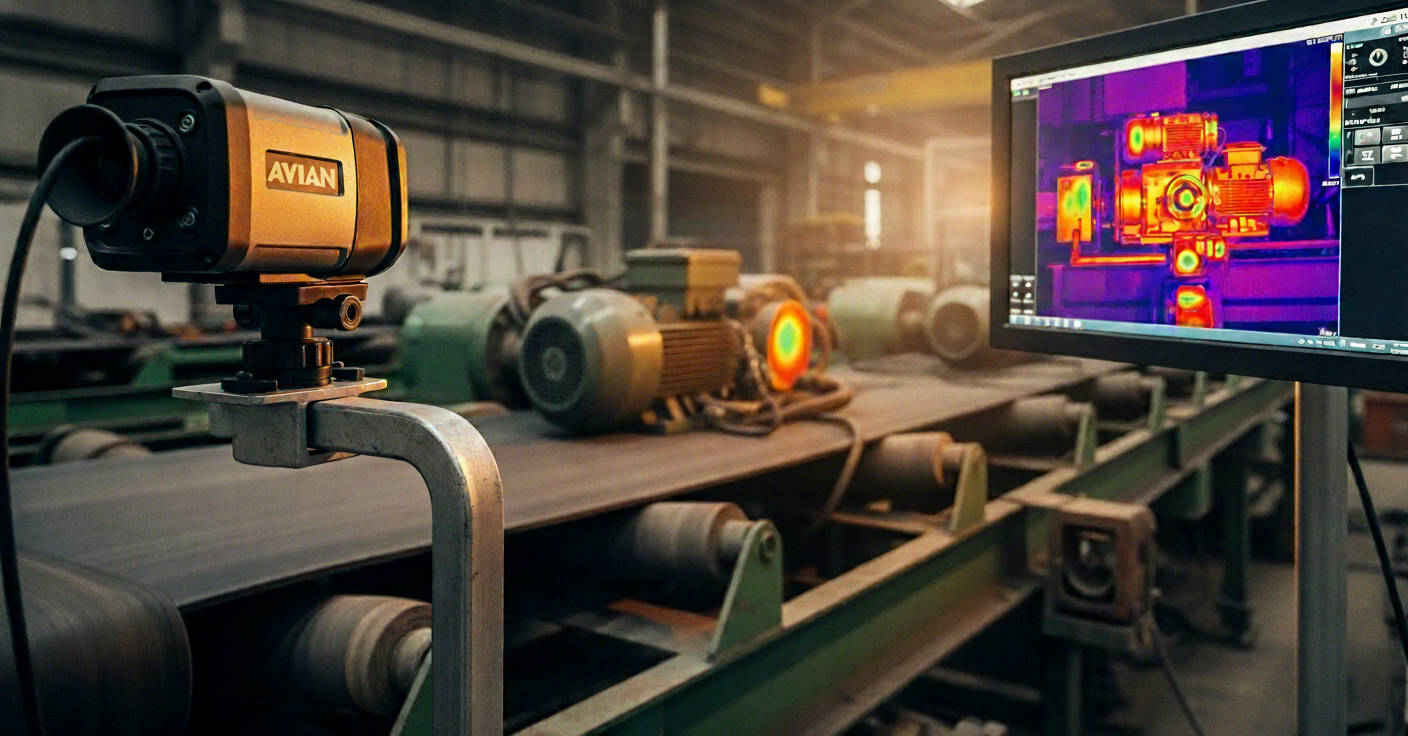
2026-04-08/Drew Hanover
What Infrared Monitoring Is and Why It Warns Industrial Teams Earlier
Light You Can't See
Everything gives off heat. Your hand. A running motor. A bearing that's about to fail.
Most of that heat is invisible. Not because it isn't there, but because human eyes only detect visible light. Infrared monitoring changes that. It turns heat into a picture you can see, analyze, and act on.
Here's how it works.
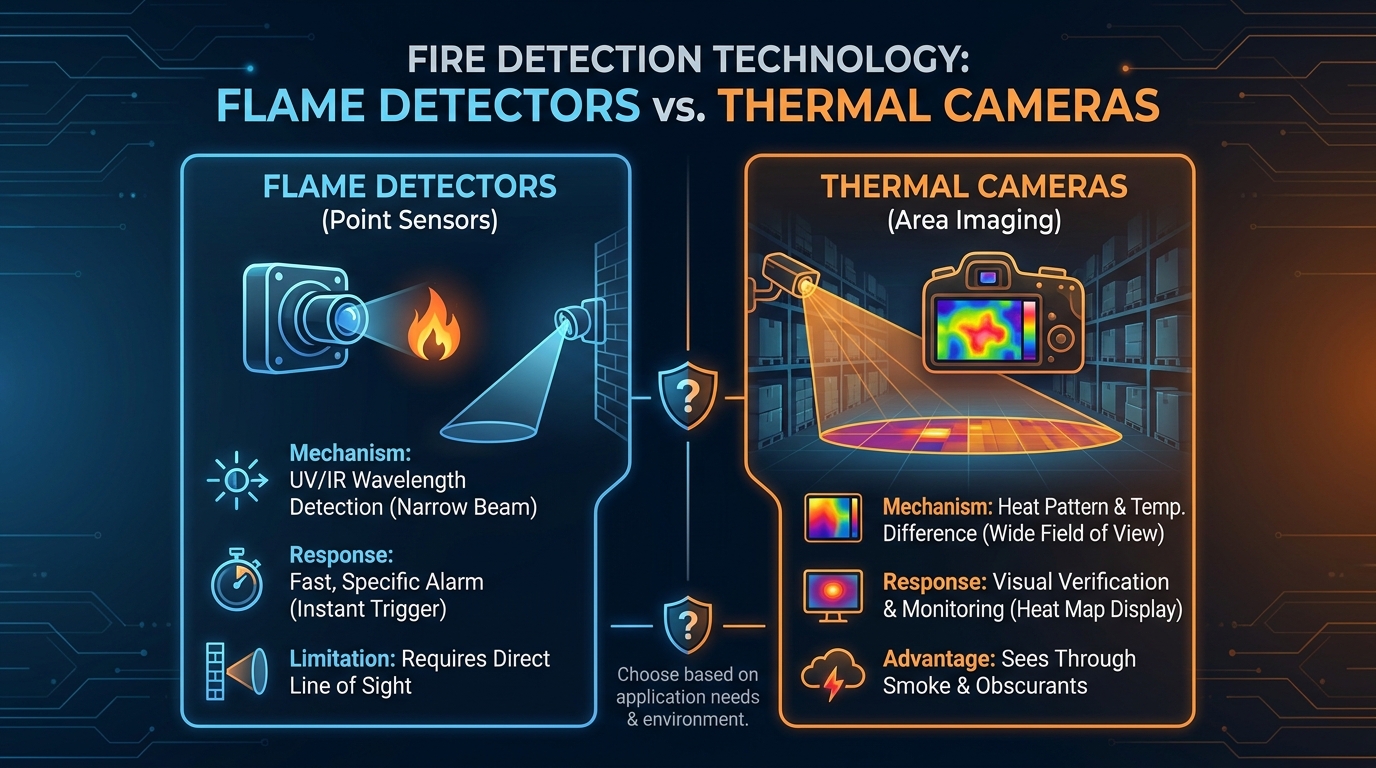
The electromagnetic spectrum covers a huge range of wavelengths. Visible light is only a small slice of it. Infrared sits just beyond what the eye can detect, at wavelengths between roughly 0.7 and 14 micrometers. If you want the terminology breakdown, we cover the difference between infrared cameras and thermal cameras separately.
Every object above absolute zero (-273°C) radiates infrared energy. The hotter the object, the more energy it emits. A thermal camera detects that energy and converts it into a temperature reading for each point in its field of view.
The result is a thermal image: a map of surface temperatures across an entire scene, updated in real time.
How a Thermal Camera Works
A standard camera captures visible light using a lens and a photosensitive sensor. A thermal camera works on the same principle, but with a sensor designed to detect infrared radiation instead.
The main components:
- Infrared lens. Standard glass blocks infrared light. Thermal cameras use lenses made from materials like germanium or silicon that transmit infrared wavelengths.
- Detector array. A grid of tiny sensors, each one measuring the infrared energy hitting it. Common detector types are microbolometers (uncooled, lower cost) and cooled detectors (higher sensitivity, used in research and military applications).
- Signal processing. Raw sensor data is converted into temperature values. Algorithms correct for factors like emissivity (how efficiently a surface radiates heat) and ambient temperature.
- Display. Temperature data is rendered as a false-color image, typically using a color scale where cooler areas appear blue and hotter areas appear yellow, orange, or red.
The camera does not emit anything. It is passive. It only listens to the heat that objects are already radiating.
What Emissivity Means
Not all surfaces radiate heat equally well. A polished metal surface reflects infrared energy from nearby objects rather than emitting its own. A matte surface radiates much more efficiently.
This property is called emissivity. It ranges from 0 (perfect reflector) to 1 (perfect emitter). Most industrial materials like painted metal, rubber, and wood have emissivity values between 0.8 and 0.95, which makes them easy to measure accurately.
Shiny, bare metals are the tricky ones. A bare steel bearing might appear cooler than it actually is if the camera's emissivity setting is wrong. Good monitoring systems account for this and allow technicians to set the correct emissivity for each part of a scene.
From Temperature Data to Actionable Alerts
A thermal camera alone is just a sensor. The value comes from what you do with the data.
In industrial monitoring, the workflow looks like this:
- Baseline. The system learns what normal looks like for a given piece of equipment at typical operating temperatures.
- Detection. When a reading deviates from the baseline by more than a defined threshold, the system flags it.
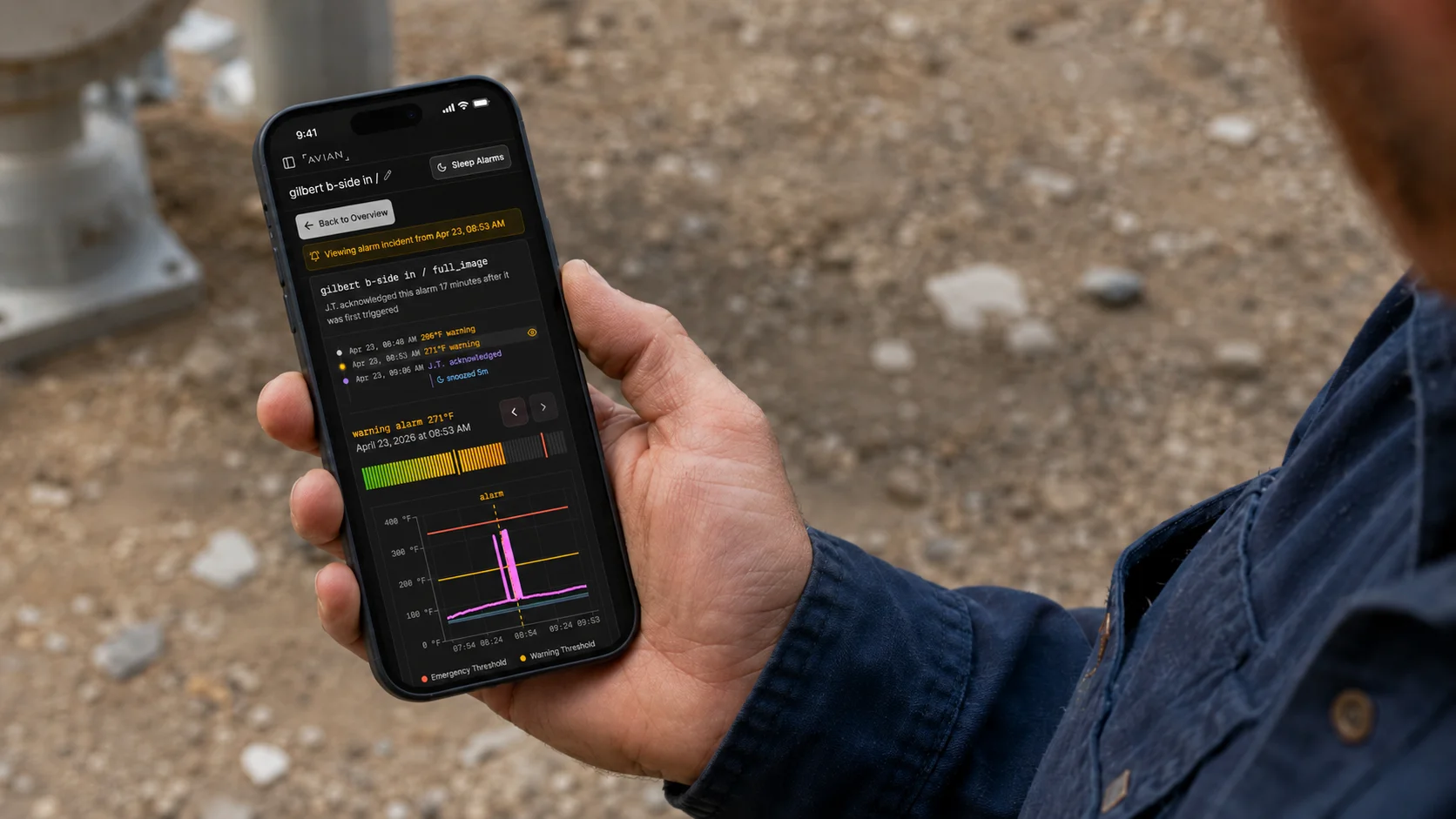
- Alert. Operators receive a notification: a text, email, or phone call, depending on severity.
- Response. The team investigates and addresses the issue before it becomes a failure or a fire.
This is the core idea: catch the problem while it's still just heat.
Why It Matters in Industrial Settings
Most industrial fires and equipment failures have one thing in common. They start with heat.
A bearing begins to fail. Friction increases. Temperature rises. If no one notices, the bearing seizes, sparks fly into sawdust or scrap material, and a fire starts. The whole sequence might take hours, or it might happen in minutes.
Infrared monitoring watches continuously. It doesn't get tired at 3AM. It sees the bearing running warm before the bearing fails.
The same applies to electrical panels, conveyor systems, motors, rollers, and anywhere else heat is generated during normal operation. Thermal monitoring gives a window into the health of that equipment that a visual inspection simply cannot provide.
Common Applications
Infrared monitoring is used across a wide range of industries and use cases:
- Predictive maintenance. Detecting hot bearings, overloaded motors, or failing electrical connections before they cause downtime.
- Fire prevention. Monitoring high-risk areas for temperature anomalies that precede ignition.
- Process monitoring. Tracking temperatures in manufacturing processes to ensure quality and consistency.
- Electrical inspections. Finding loose connections or overloaded circuits in switchgear and distribution panels.
- Building diagnostics. Identifying heat loss, moisture infiltration, or insulation defects in walls and roofs.
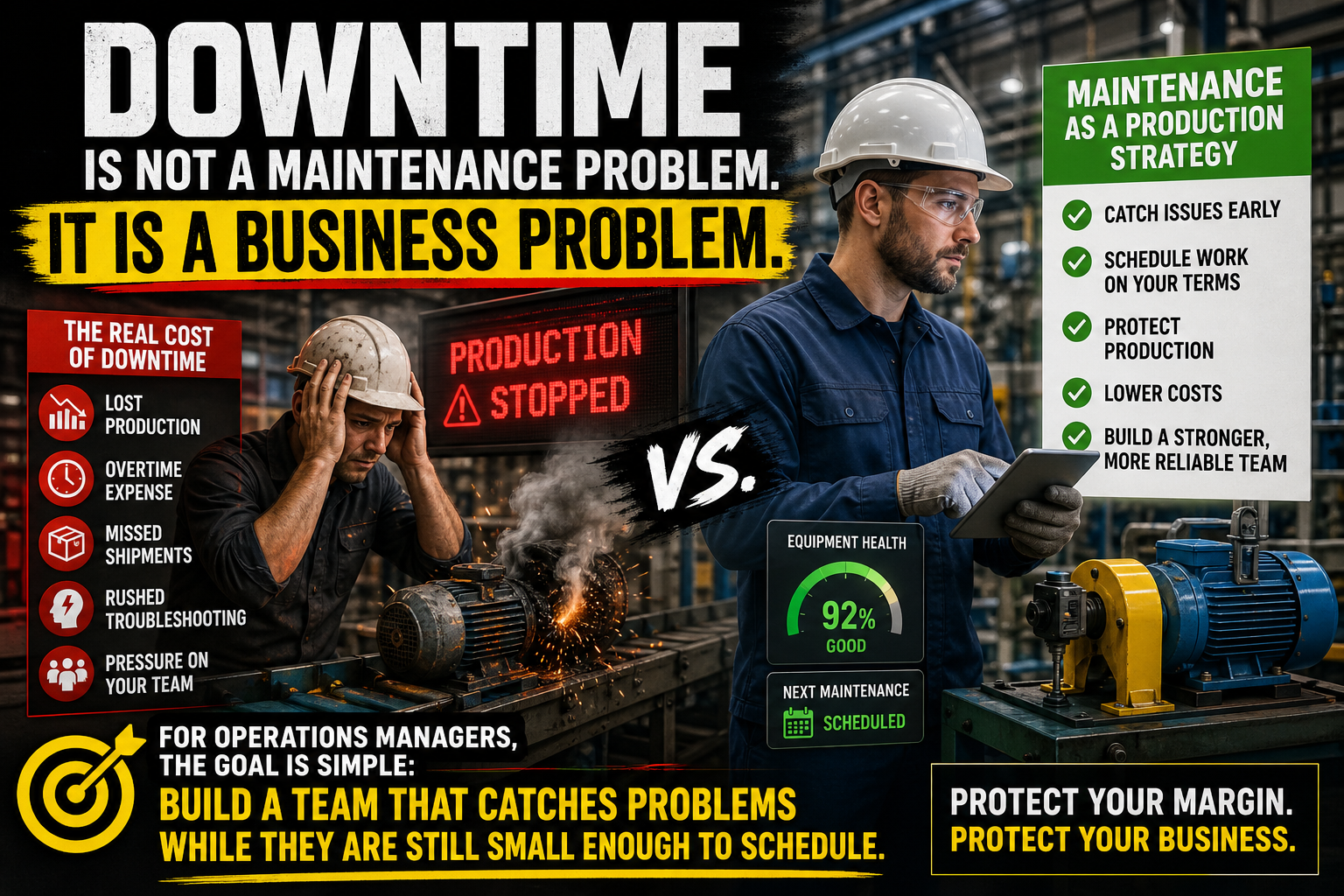
In heavy industrial environments, the fire prevention and predictive maintenance applications are especially valuable. The cost of a missed bearing failure or an undetected smoldering fire far exceeds the cost of monitoring.
The Limits of the Technology
Thermal cameras are powerful, but they have limitations worth understanding.
They measure surface temperature, not internal temperature. A hot bearing inside a sealed housing might not be visible unless the housing itself heats up enough to show a difference.
They can't see through walls or solid objects. Line of sight matters. A camera monitoring a conveyor can only detect heat from what it can actually see.
Environmental conditions affect accuracy. High ambient temperatures, steam, or dust can interfere with readings. Good system design accounts for these factors through proper camera placement and calibration.
And false alarms are a real risk. A forklift passing through the frame. Welding operations in an adjacent area. Normal process heat that looks alarming out of context. Systems that don't filter for these situations end up generating so many alerts that operators start ignoring them, which defeats the purpose entirely.
What Makes a Monitoring System Useful
The hardware is only part of the equation.
A thermal camera mounted on a wall and left unconfigured gives you a picture. It doesn't give you protection. Useful monitoring requires:
- Correct placement so the camera sees what it needs to see.
- Accurate calibration for the materials and conditions in that environment.
- Sensible thresholds that distinguish a real anomaly from normal variation.
- Reliable alerting that reaches the right people fast enough to act.
- Ongoing review to catch false positives, refine settings, and improve over time.
Most industrial sites that have thermal cameras don't have all of these things. They have the hardware without the system around it.
That gap is where fires happen.
If you're curious how infrared monitoring applies to your facility, reach out to our team. We're happy to walk through what a real deployment looks like.
Drew Hanover
CTO & Co-Founder
Get new AVIAN insights in your inbox
We'll send practical notes on industrial fire prevention, thermal monitoring, and customer learnings. No noise.