Back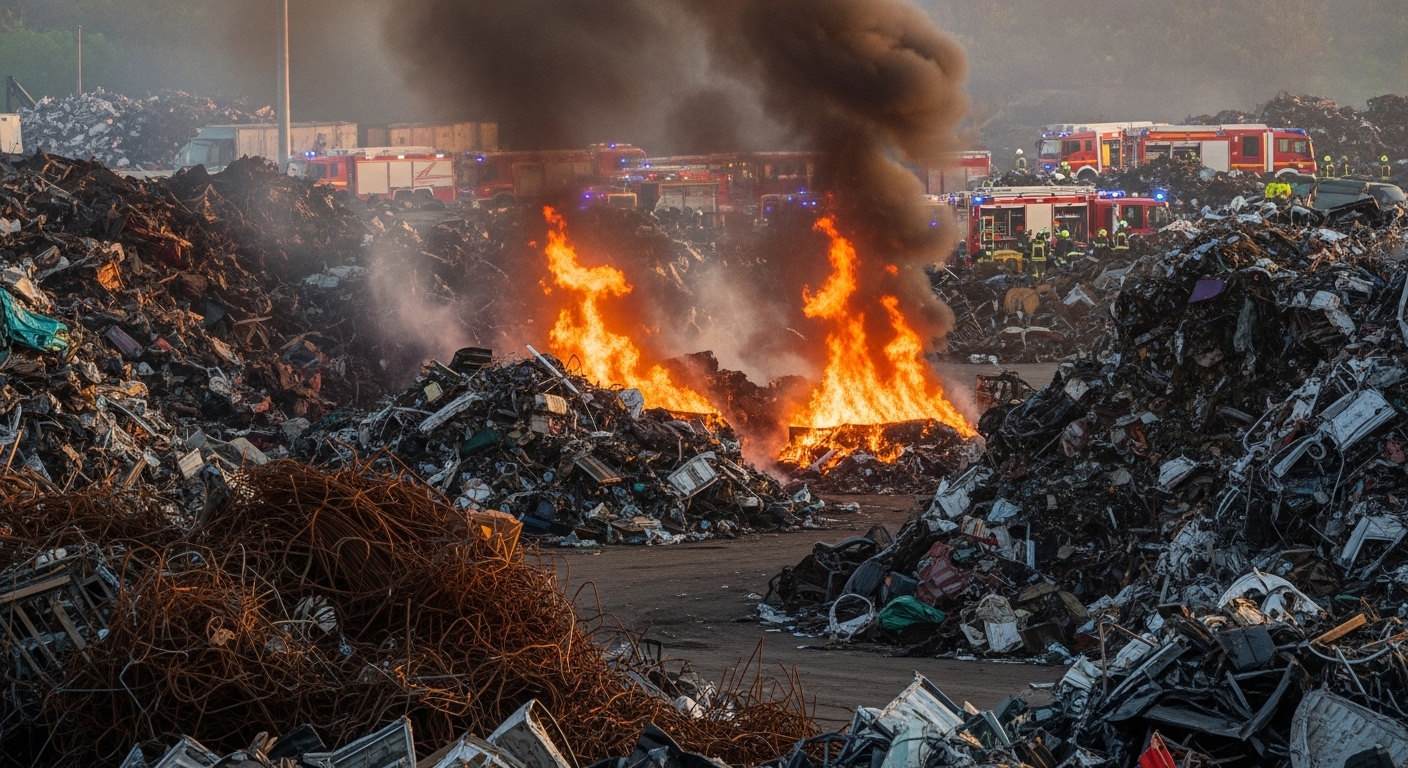
2026-01-21/Drew Hanover
Scrap Piles Are Burning. Metal Recovery Operators Are Paying the Price.
Scrap metal is supposed to be inert. It's metal. It doesn't burn.
Except it does. All the time.
In 2025, scrap metal operations accounted for approximately 31% of all publicly reported fires at recycling and waste facilities across the United States and Canada. That's more than 138 fires in a single year. Behind each one: evacuations, emergency response, environmental liability, and losses that can wipe out a business that took decades to build.
The industry knows the risk. Most operators just don't know how bad it's gotten.
The Numbers
Fire Rover's 2025 industry fire report, authored by vice president Ryan Fogelman, pegged total losses across U.S. and Canadian recycling and scrap facilities at approximately $2.5 billion — from 448 publicly reported incidents. About 100 of those were catastrophic events, with repair or replacement costs ranging from $500,000 to tens of millions of dollars.
Scrap metal yards aren't the only facilities burning. But they're burning at scale, and more often than operators want to admit.
Why Scrap Piles Catch Fire
The answer isn't one thing. It's a combination of conditions that most scrap yards have in abundance.
Hidden lithium-ion batteries. This is the fastest-growing cause of scrap yard fires, and the hardest to control. Batteries from electric vehicles, e-bikes, cordless tools, appliances, and consumer electronics are entering the scrap stream every day. When a battery is compressed or shredded during processing, it can enter thermal runaway — a self-sustaining chemical chain reaction that generates extreme heat. The cell looks undamaged until it isn't. A battery crushed on Monday can ignite a pile on Thursday.
Inbound material fires. Scrap arrives from all kinds of sources. Not all of it arrives cold. Loads that contain smoldering material — hot embers buried in auto shredder residue, coals in a scrap load from a demolition site — can ignite surrounding piles on contact. If the load isn't screened and monitored as it arrives, the fire is already in your yard before anyone realizes it.
Hot work and torching. Welding, cutting torches, and shearing equipment produce sparks and molten metal fragments. These don't have to land far to cause damage. In a scrap yard, the fuel is everywhere.
Shredder residuals. Oils, fuels, and other flammable contaminants trapped in automotive scrap ignite easily during shredding. Shredder residue fires are among the most difficult to extinguish because the material is dense, smoldering, and generates significant heat deep in the pile.
Spontaneous combustion. Some metals and metal-contaminated materials self-heat without any external ignition source. Shredder fluff, fine aluminum particles, and magnesium-bearing materials are known risks. The pile looks stable. It isn't.
Recent Events
The incidents are not hypothetical. They're happening now, in real yards across North America.
Springfield, Ohio (March 2026): A fire at Santoro Metals destroyed vehicles and household appliances staged for recycling. Burning electronics and mixed metals generated toxic smoke, triggering a shelter-in-place order for nearby residents. Fire officials advised those within a quarter mile to stay indoors with windows closed.
Miami-Dade, Florida (April 2025): A three-alarm fire at Ferrous Processing & Trading Company required more than 45 fire units and nearly four hours to extinguish. Roughly 20 employees were evacuated. The same facility had experienced a fire the previous year. No injuries were reported — but the disruption and cost were substantial.
Calgary, Alberta (July 2024): A two-alarm fire at an Ogden Road SE metal recycling yard drew 19 fire trucks and 44 firefighters. The fire involved crushed vehicles and took three hours to fully extinguish. Fortunately, no injuries. But the emergency response cost was significant.
Whitchurch-Stouffville, Ontario (July 2025): Crews described a scrap yard fire as a "prolonged operation" — the kind that runs through shift changes, burns through suppression resources, and leaves the facility offline for days.
These aren't rare. They're regular.
The Fire Risk Window: When Yards Are Most Vulnerable
Most fires in scrap yards don't start at noon on a Tuesday.
They start at night, on weekends, and during holidays — exactly when staffing is thinnest and response times are longest. A lithium-ion battery that was damaged during Thursday's shredder run can sit in a pile through the weekend and ignite at 2AM Saturday, when the yard has one overnight security guard and the nearest fire station is eight minutes away.
The fire risk window is the gap between when ignition begins and when any human notices. In a monitored facility, that window is seconds. In an unmonitored yard at night, that window is long enough for a smoldering pile to become a total loss.
Solutions on the Market
The industry has a growing toolkit of fire mitigation options. Each comes with real tradeoffs.
Traditional Sprinkler Systems
How they work: Fixed overhead suppression triggered by heat or smoke. Industry standard for decades.
Pros:
- Well understood, widely available, straightforward to install and inspect
- Low operational overhead once installed
- Required by most fire codes; satisfies basic insurance requirements
Cons:
- React after combustion has already begun — sprinklers don't prevent fires, they suppress them
- Significant water damage to equipment, inventory, and infrastructure when activated
- Open-air scrap yards often can't use overhead sprinklers effectively; coverage gaps are common
- No early warning; no integration with detection systems by default
- Ineffective for smoldering lithium-ion fires, which require high-volume targeted suppression
Bottom line: Sprinklers are necessary. They're not sufficient.
Smoke and Heat Detectors
How they work: Ceiling or area-mounted sensors that trigger alarms when smoke density or ambient temperature exceeds thresholds.
Pros:
- Inexpensive and widely deployed
- Meets minimum code requirements in most jurisdictions
- Simple to maintain
Cons:
- Designed for enclosed indoor environments; poor performance in open-air yards with wind dispersal
- Activate after combustion begins — by the time a smoke alarm sounds, a scrap pile fire may already be established
- High false alarm rates in industrial environments with diesel exhaust, dust, and ambient heat
- No detection of sub-ignition heat events — a battery in thermal runaway generates intense heat before any smoke
Bottom line: A baseline, not a strategy.
Thermal Imaging Cameras
How they work: Infrared cameras detect heat signatures across wide areas, identifying anomalies before ignition. Systems can be fixed or mobile, and integrated with alert and suppression platforms.
Pros:
- Detects heat at the earliest stages of thermal runaway, often before any visible smoke
- Continuous coverage 24/7, including nights and weekends
- Works in open-air environments where smoke detectors fail
- Integrates with automated response systems and PLCs to trigger shutdowns, alerts, or suppression
- Provides documented thermal event records — valuable for insurance underwriters
Cons:
- Upfront installation and configuration cost
- Requires calibration to baseline facility conditions; false positives can occur during initial deployment
- Detection alone doesn't suppress a fire; must be paired with response systems
- Elevated ambient heat from equipment can complicate baseline modeling
Bottom line: The strongest early warning tool available for scrap yards. Most effective when paired with automated response.
Fire Rover — Autonomous Detection and Suppression
Fire Rover is a system purpose-built for high-risk industrial environments. Originally developed for scrap metal operations, it combines thermal imaging, flame detection, and smoke analytics with 24/7 human monitoring and remote-operated suppression.
How it works: When a thermal event or flame signature is detected, the feed goes immediately to a staffed monitoring center. A trained specialist verifies the threat in real time and activates remote water suppression — targeting the exact location of the fire without relying on on-site personnel to respond. The system averages approximately 440 gallons per incident, up to 88% less water than traditional suppression.
Pros:
- Human verification prevents false alarms — the system doesn't just fire automatically
- Covers the hours and zones where automated-only systems fall short
- Specifically addresses scrap yard fire types: lithium-ion, inbound loads, hot work, shredder residuals, spontaneous combustion
- Remote operation keeps staff out of harm's way
- FM-approved; recognized by insurance underwriters
Cons:
- Ongoing monitoring subscription cost (not a one-time purchase)
- Requires communication infrastructure to support real-time video monitoring
- Human verification adds slight latency compared to fully automated suppression — though this is generally a feature, not a bug
Bottom line: One of the most complete solutions on the market for scrap yards specifically. The combination of thermal detection, human verification, and targeted remote suppression addresses the unique risks of metal recovery operations that generic systems miss.
AVIAN Thermal Monitoring
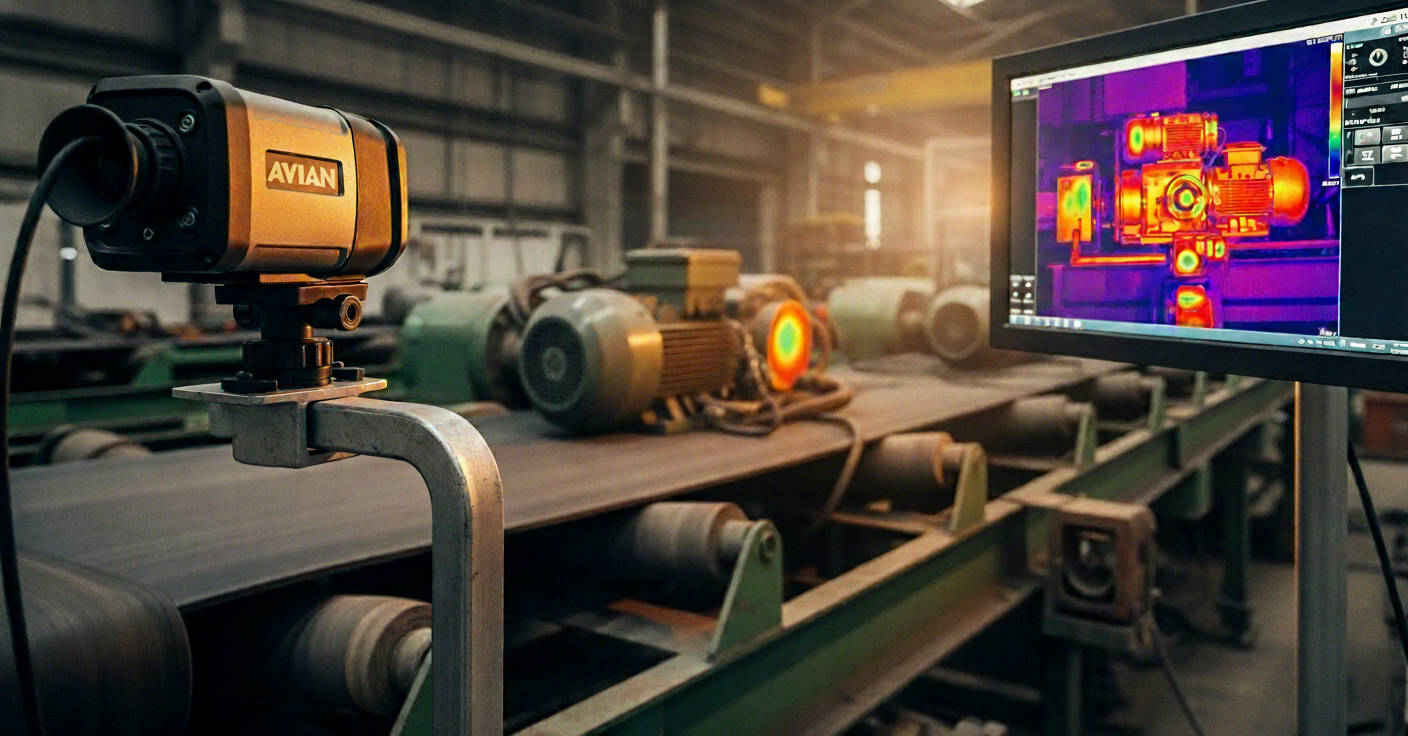
AVIAN provides continuous thermal imaging and AI-based anomaly detection for industrial facilities, including metal recovery and recycling operations. Where Fire Rover focuses on detection plus human-verified remote suppression, AVIAN focuses on persistent AI-driven thermal surveillance that learns the normal thermal baseline of a facility and alerts on deviations before ignition.
Pros:
- AI-based baseline modeling adapts to facility conditions — reduces false positives over time
- 24/7 continuous coverage with automated alerts via text, call, and email
- PLC integration enables automated conveyor shutdowns and suppression triggers
- Comprehensive event logging — every thermal event is timestamped and documented
- Covers tipping floors, processing lines, bale storage, and outdoor yards
Cons:
- Detection-focused; suppression must be handled by integrated systems or on-site response
- Requires initial calibration period for baseline learning
- Most effective when combined with mechanical response systems for full incident automation
Bottom line: A strong fit for operations wanting persistent AI-driven thermal surveillance with deep integration into existing control infrastructure.
The Insurance Dimension
The fire frequency in scrap metal operations has not gone unnoticed by underwriters.
Insurance carriers are responding to the claims data the same way they responded to MRF fire losses — by raising premiums, adding exclusions, and in some cases declining to renew policies for facilities without documented fire prevention infrastructure.
Scrap yards that operate without thermal monitoring and documented event protocols are increasingly landing in the highest-risk underwriting tier. Some operators have seen annual premium increases of 20–30% or more, with no claims history.
The operators who are navigating renewals successfully are the ones who show up with evidence: documented thermal event logs, automated detection system certifications, PLC integration records, and written incident response protocols. That evidence changes the underwriting conversation from "how do we price your risk?" to "how do we discount your premium?"
Fire prevention technology isn't just about preventing fires. In the current insurance market, it's about staying insurable.
What an Unmonitored Night Looks Like
Here's what happens at a scrap yard without continuous thermal monitoring.
A load arrives Thursday afternoon with a lithium-ion battery pack from a scrapped e-bike buried in mixed metal. The load gets pushed into a staging pile. The battery was damaged in transport. Over 12 hours, it heats internally — no smoke, no flame. By 2AM Friday, the pile is on fire.
The fire grows for 20–30 minutes before the security camera triggers a notification, or a neighbor calls 911. Fire trucks arrive. The pile is by now involved. Suppression takes hours. The yard is offline for days.
If that pile had been under continuous thermal surveillance, the temperature deviation would have been visible long before ignition — while the fire was still preventable.
That's the gap. And it's the gap that's costing this industry $2.5 billion a year.
The Path Forward
Scrap metal recovery is essential. The world needs it. But the fire risk embedded in modern scrap — driven by lithium-ion batteries, contaminants, and the sheer density of mixed materials — is not something that walk-arounds and smoke detectors can address.
The facilities that are reducing fire risk are doing a few things consistently:
- Deploying continuous thermal monitoring on incoming material, processing areas, and outdoor pile storage
- Integrating detection with response — alerts that go to people who can act, and systems that can respond without human delay
- Documenting everything — thermal event logs, incident records, response actions — to demonstrate to insurers that the facility operates with discipline
The technology exists. Fire Rover and AVIAN are both deployed in scrap and metal recovery environments today, detecting the events that used to become headlines.
The choice isn't between expensive and cheap. It's between monitoring and hoping. And the cost of hoping is still climbing.
Want to understand how thermal monitoring applies to your scrap operation? Talk to our team — we'll walk you through what coverage looks like for your specific yard.
Drew Hanover
CTO & Co-Founder