Back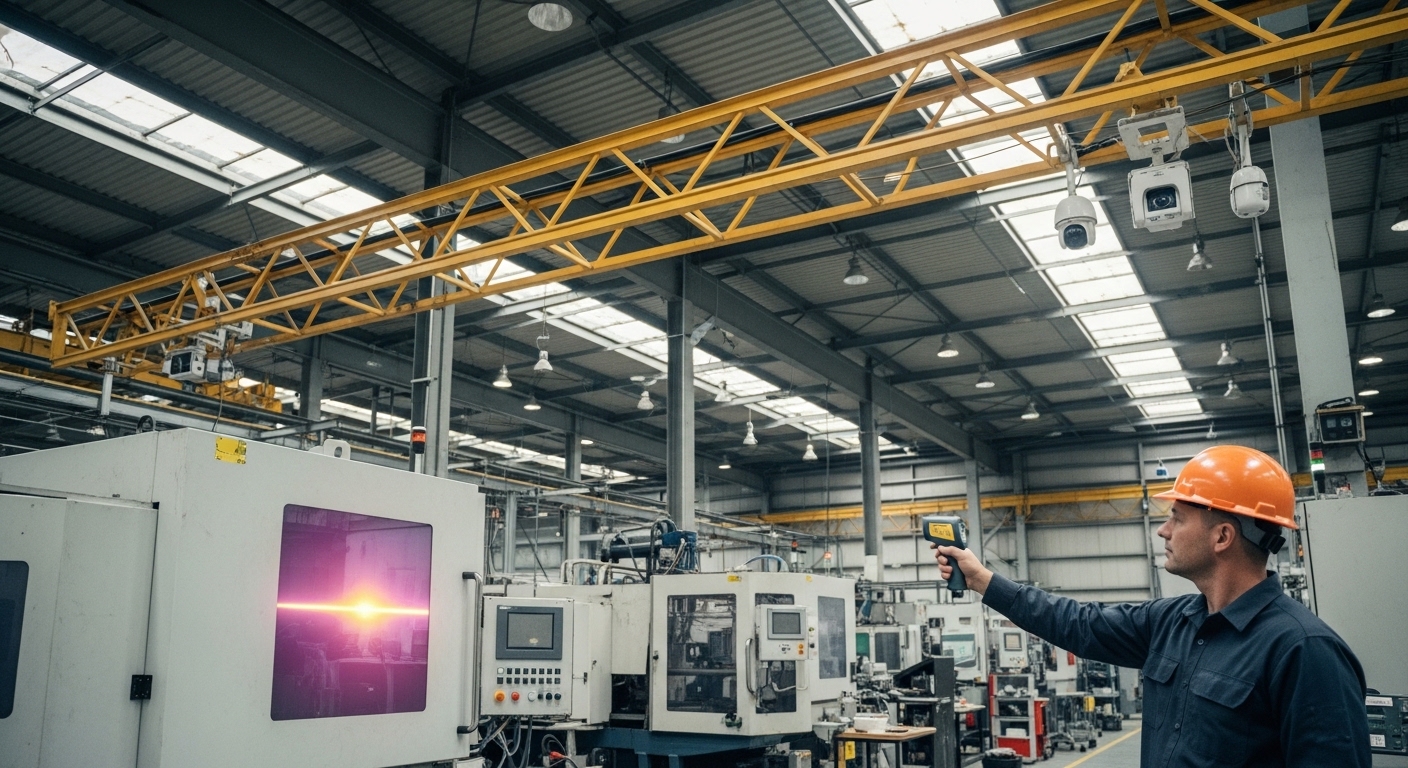
2026-03-11/Drew Hanover
Why Spot Monitoring Is Not Enough for Industrial Thermal Safety
"We already have FLIR."
We hear this on nearly every discovery call. And in 95% of cases, it means the same thing: a handheld infrared temperature gun. Someone walks a route once a shift. They point. They shoot. They write down numbers.
It's a smart, proactive step. We mean that. Any temperature monitoring is better than none.
But here's what that approach can't do — and why facilities that rely on spot checks alone are leaving serious gaps in their fire prevention and predictive maintenance programs.
The Labor Problem Nobody Wants to Talk About
Every facility we visit is trying to do more with less. Headcount is down. Experience is walking out the door. The guy who knew every bearing sound and motor quirk retired three years ago.
Now you're asking whoever's available to walk a route with a temp gun. Maybe it happens every shift. Maybe it doesn't.
Spot monitoring only works when someone does it. Consistently. Correctly. On schedule.
The reality? Inspections get skipped. Shifts get short-staffed. Equipment gets missed because the route takes too long and production won't wait.
When that happens, you don't have monitoring. You have hope.
The Consistency Problem
Let's say your team does every inspection perfectly. Every shift. Every day.
How do you compare today's reading to last week's? To last month's?
A handheld temp gun gives you a number. It doesn't give you context. Was the equipment under load when you measured it? Was it a cold morning? Had it been running for ten minutes or ten hours?
Temperature isn't just a number. It's a behavior. A bearing that runs at 140°F under full load might be perfectly healthy. The same bearing at 140°F during startup might be weeks from failure.
Without continuous measurement under consistent conditions, you can't trend. Without trending, you can't predict. You're reacting, not preventing.
The Missed Inspection Problem
Here's a question most facilities can't answer: How do you know if an inspection was missed?
If your technician skips a check — intentionally or not — how would you find out? If they write down "normal" without actually measuring, who would know?
Spot monitoring creates accountability gaps. There's no log that proves the measurement happened. No timestamp. No image. Just a number on a clipboard.
This isn't about blaming your team. It's about recognizing that manual processes have manual failure modes. People get busy. They get interrupted. They get tired.
A system that depends on human perfection is a system waiting to fail.
The Coverage Problem
A technician with a temp gun monitors one point at a time. They walk to a motor. They measure. They move on.
What happens between measurements?
A bearing can go from warm to critical in hours. A stuck board can create an ember in seconds. An electrical fault can arc between inspections.
Spot monitoring gives you snapshots. You need a movie.
What Continuous Monitoring Actually Means
AVIAN cameras don't replace your maintenance team. They extend what your team can do.
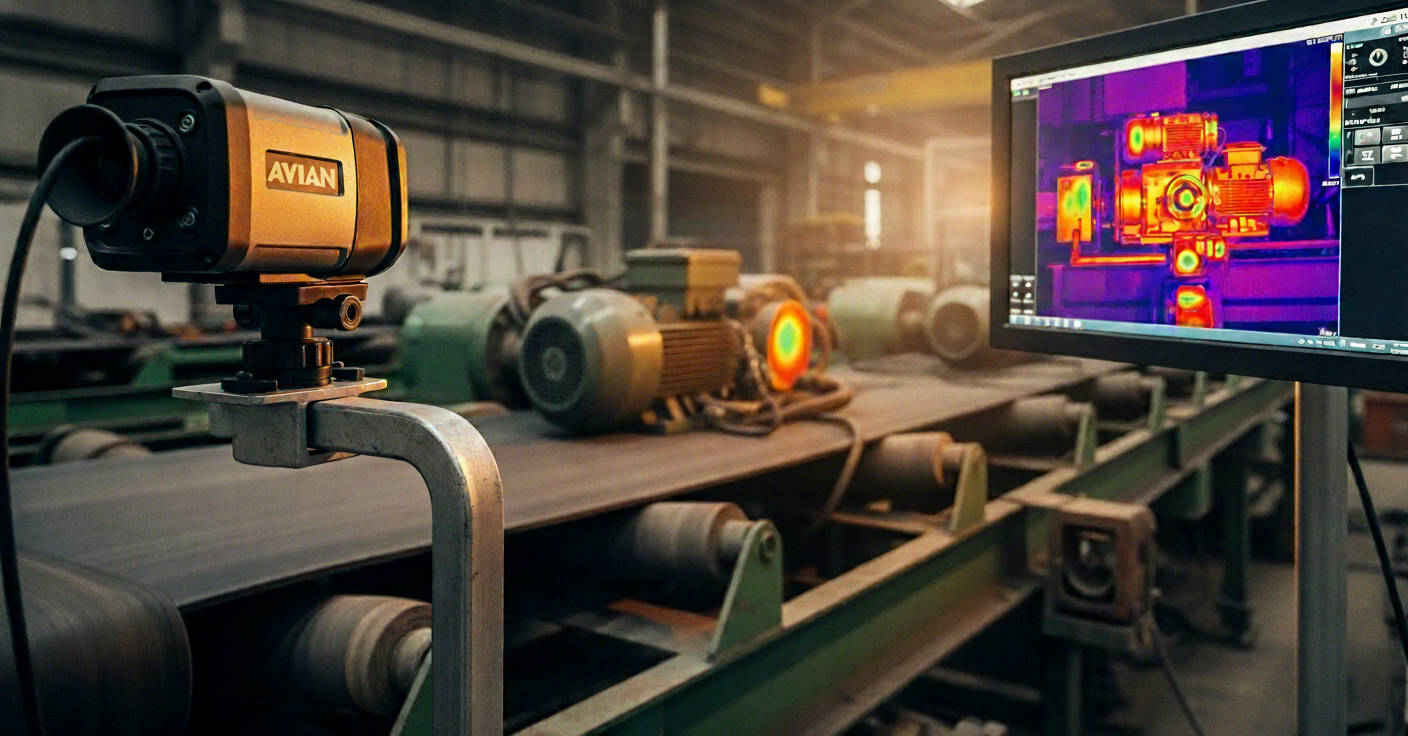
A single camera monitors an entire zone — every motor, bearing, belt, roller, and duct in its field of view. Not once a shift. Every second. 25 measurements per second, across every pixel.
When something changes, we catch it. Not because someone remembered to check. Because the system never stops watching.
Automatic baselines. Our algorithms learn what "normal" looks like for every piece of equipment. Not a static threshold you set and forget. A dynamic baseline that adapts to load, time of day, and seasonal variation.
Trending over time. We don't just tell you the temperature right now. We show you how it's changed over days, weeks, months. That slow bearing degradation that's invisible in daily spot checks? It shows up clearly in our analytics.
Verified measurements. Every reading is timestamped. Every anomaly has a thermal image. No more "trust me, I checked it."
Coverage during the gaps. Second shift. Third shift. Weekends. Holidays. The 3AM fire that nobody saw starting. AVIAN doesn't take breaks.
Spot Monitoring Has Its Place
We're not saying throw away your FLIR gun. Handheld thermal cameras are useful tools. They're great for troubleshooting a specific problem. For verifying a suspected issue. For inspecting equipment that's outside your fixed cameras' view.
Periodic spot checks can complement continuous monitoring. They shouldn't be your only line of defense.
Think of it like smoke detectors. You wouldn't rely on someone walking through your house once a day to sniff for smoke. You install detectors that watch 24/7. Then you still keep a fire extinguisher handy for the situations that need human judgment.
Spot monitoring is the fire extinguisher. Continuous monitoring is the smoke detector.
The Real Question
Here's what we ask facilities still relying on spot checks alone:
If a critical bearing failed tonight at 2AM, would you know before the damage was done?
If an ember started in your dust duct during shift change, would anyone catch it before it became a fire?
If your maintenance tech missed an inspection last Tuesday, would you ever find out?
If the answer to any of these is "no" or "I don't know" — that's the gap continuous monitoring fills.
Making the Transition
Moving from spot checks to continuous monitoring doesn't mean starting from scratch. Most of our customers keep their existing inspection routines, at least initially. The AVIAN system runs alongside, providing the 24/7 coverage and historical trending that spot checks can't deliver.
Over time, teams often shift their focus. Instead of walking routes to collect data, they're reviewing the data our system already collected. Instead of reacting to failures, they're scheduling maintenance based on actual equipment behavior.
The temp gun doesn't go away. It just stops being the only thing standing between you and an unplanned shutdown.
Want to see what continuous monitoring would catch at your facility? Schedule a walkthrough with our team and we'll show you the gaps in your current approach.
Drew Hanover
CTO & Co-Founder